
How to Choose the Right Chemistry Tutor for an A-Level, IB, or GCSE Resit

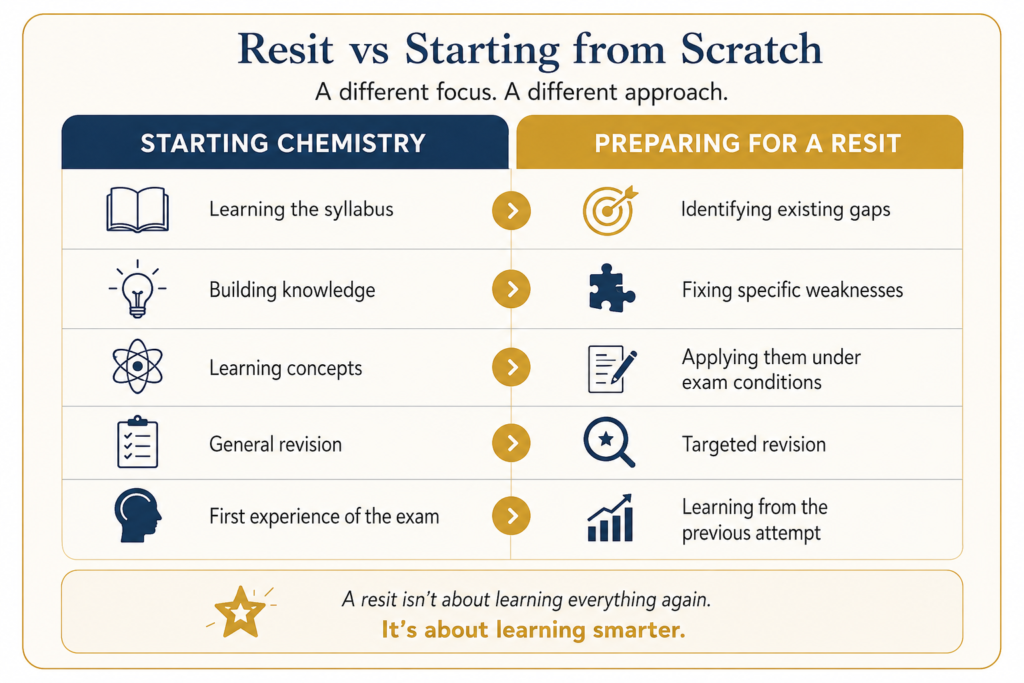
When parents reach out about a resit, they rarely ask, “Will my child pass?” More often, they want to know what the lessons will actually look like this time. That’s a fair question, since tutoring for a resit is different from teaching a subject from the beginning. Here’s what I believe you should look for in any tutor, whether it’s for A-Level Edexcel, AQA, OCR Chemistry, IB, or GCSE and IGCSE. I’ll explain my own process, since seeing how it works in practice is more helpful than a general promise.
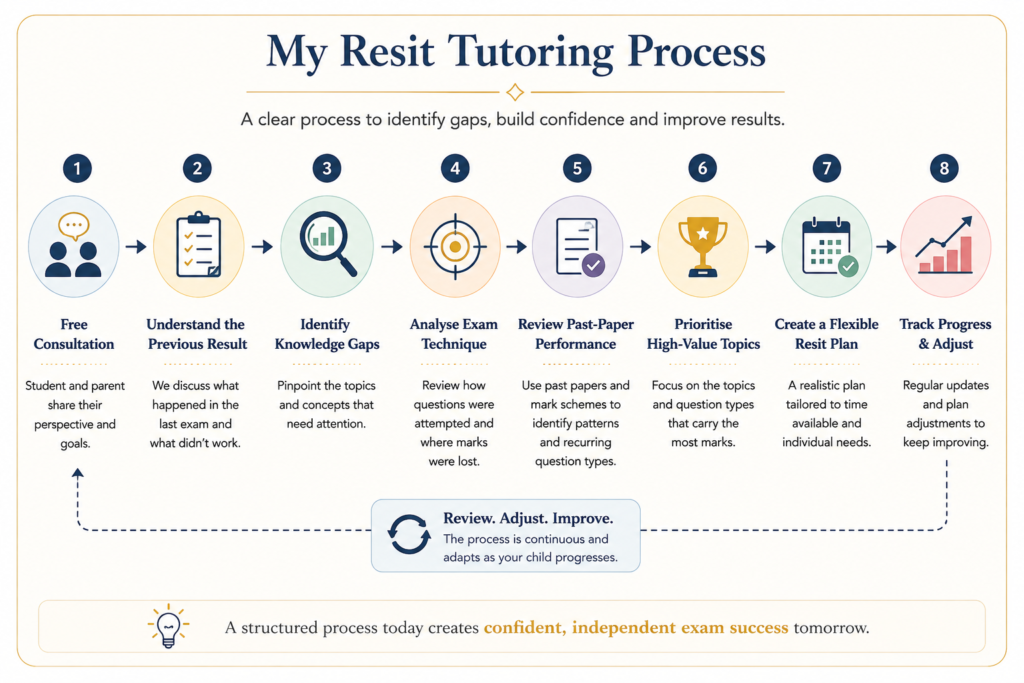
Starting With a Free Consultation
Before making any plans, I offer a free call with both the student and the parent. I want to hear from the student how they felt about the last exam and where they feel unsure. I also ask the parent what they’ve noticed at home, such as procrastination, late nights before deadlines, or a general sense that things are unmanageable.
These two perspectives don’t always match, and the difference can be very helpful. For example, a student might feel confident in organic chemistry but worry about calculations, while a parent is more focused on how revision time is spent each day. Both points of view are important. This approach also helps avoid repeating material the student already knows. Most resit students don’t need the whole syllabus explained again. They need someone to quickly find out where the real gaps are.
How I Utilize Past Papers and Mark Schemes
Past papers get mentioned by nearly every tutor, so it’s worth being specific about what that means in practice. It isn’t handing over a paper and marking it at the end of the week. I go through mark schemes line by line with students because exam boards reward very specific things, often more specific than students expect. A correct answer written the wrong way can still lose marks, and an answer that feels incomplete to a student can sometimes score higher than they assume.
Doing this repeatedly, under timed conditions, is what builds speed. For a resit student, confidence usually comes from familiarity rather than from learning something entirely new. By the time exam day arrives, I want a student to have seen enough variations of a question type that nothing in the hall feels unfamiliar.
A Realistic Plan
I put together a plan early on, but I don’t treat it as rigid. If a topic takes longer than expected, the plan shifts. If a student picks something up faster than we thought, that time gets used elsewhere rather than sitting unused because the schedule said otherwise.
I think this matters more for resit students than for most. Many of them have already lived through a plan that didn’t survive contact with real life: a pace that didn’t fit, a timetable that assumed everything would go smoothly. Being upfront about that, and building in room to adjust, tends to matter more in the end than a plan that looks impressive on day one.
Why I Prioritise the Topics Worth the Most Marks
When time is limited, and for most resit students it is, I don’t try to re-teach the entire syllabus for the sake of reassurance. It can feel safer to cover everything, but that isn’t always the best use of the time available. Instead, I look at where the marks are most concentrated, the topics and question types that come up consistently and carry weight, and I make sure those are solid before spreading time more evenly across everything else.
I’d rather, honestly, spend a few months well on the highest-value areas, which usually move a grade further, than have an ambitious plan to cover absolutely everything, which runs out of time halfway through.
Confidence Matters As Much As Content
Most resit students I work with are carrying something from the first attempt, even when they don’t say so directly. Disappointment, a bit of embarrassment, sometimes a quiet worry that they’re just “not a chemistry person.” None of that is true, but the feeling is real, and I don’t think it helps to skip past it and go straight to content.
My sessions are judgment-free, and I mean that quite literally. Getting something wrong in a lesson isn’t a setback; it’s exactly the information we need. Momentum tends to build quietly, one steady session at a time, rather than through big pep talks. I’d rather a student leave a lesson feeling more grounded than leave it feeling impressed.
Keeping Parents in the Loop
Parents are investing in this and, understandably, want to know it’s working before results day arrives. I give feedback as we go rather than saving everything for an end-of-term summary. That might be a short note after a session on what we covered and how it went, or a brief check-in if the plan requires adjusting.
I’d rather a parent hear from me that a topic is taking longer than expected, and why, than find that out only once it’s too late to do anything about it.
Questions Worth Asking The Tutor
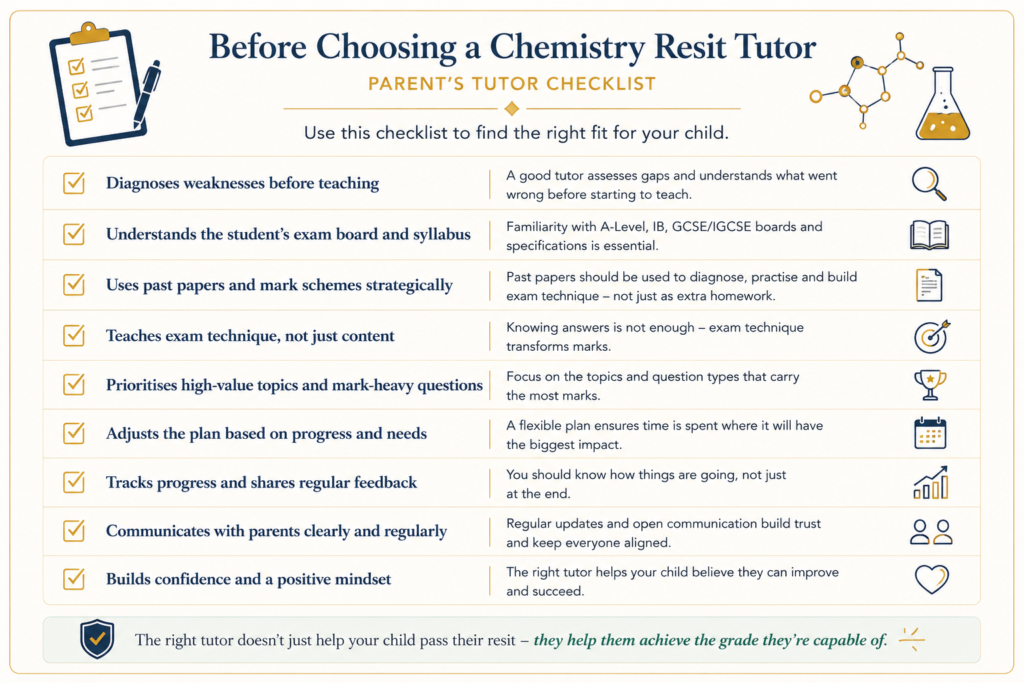
If you’re searching for tutors at the moment, these are the questions I think are actually useful, more useful than “do you utilize past papers,” since almost everyone will say yes to that one.
- What does the very first session actually involve? Is there some kind of assessment, or does teaching just start?
- If time is short before the exam, how would you decide what to focus on?
- How would the plan change if my child needs longer on something than expected?
- How will I know how things are going, and how often?
- Have you worked with resit students on this exact exam board before?
The answers tend to say more than a list of qualifications ever could.
A Few Questions Parents Often Ask Me
How many hours will my child need?
That depends on where they’re starting from and how much time is left before the exam. Some students need a tightly focused few months, others benefit from a longer run-up. I’d rather talk it through properly on a free consultation call than give a figure that doesn’t reflect your situation.
That depends on where they’re starting from and how much time is left before the exam. Some students need a tightly focused few months, others benefit from a longer run-up. I’d rather talk it through properly on a free consultation call than give a figure that doesn’t reflect your situation.
My child already knows the content, but didn’t do well last time. Can you still help?
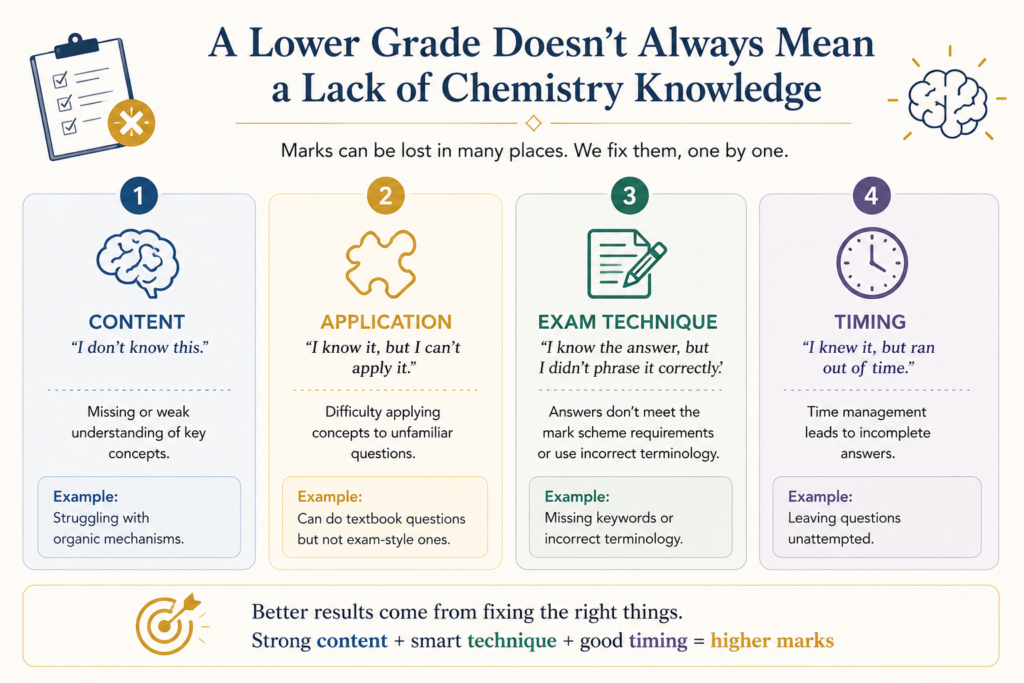
Yes, and this is actually one of the more common situations I see. The issue is often exam technique, timing, or how revision time was spent, rather than a gap in understanding. That changes what the tutoring needs to focus on from the start.
What if we’re short on time before the exam?
We prioritise. I’d rather a student walk in fully confident in the areas worth the most marks than half-prepared across everything.
We prioritise. I’d rather a student walk in fully confident in the areas worth the most marks than half-prepared across everything.
Will I get updates on how it’s going?
Yes, regularly, not just at the end. You shouldn’t have to wait until results day to find out how things have actually been going.
Yes, regularly, not just at the end. You shouldn’t have to wait until results day to find out how things have actually been going.
Free Resit Consultation
If any of this sounds like what you’re looking for, feel free to hop on a call with me. There’s no obligation, and it’s usually the clearest way to see whether it’s the right fit before committing to anything.